Buy tischtennis.online ?
We are moving the project
tischtennis.online .
Are you interested in purchasing the domain
tischtennis.online ?
domain@kv-gmbh.de · 0541-91531010
Buy tischtennis.online ?
What is the biserial correlation coefficient and the phi coefficient and the chi coefficient?
The biserial correlation coefficient is a measure of the strength and direction of the relationship between a continuous variable and a dichotomous variable. It is calculated when one variable is continuous and the other is dichotomous. The phi coefficient is a measure of association between two dichotomous variables. It is calculated using a 2x2 contingency table and ranges from -1 to 1, with 0 indicating no association and 1 indicating a perfect association. The chi coefficient is a measure of association between two dichotomous variables, similar to the phi coefficient. It is also calculated using a 2x2 contingency table and ranges from -1 to 1, with 0 indicating no association and 1 indicating a perfect association. **
Which correlation coefficient?
The correlation coefficient is a statistical measure that quantifies the strength and direction of a relationship between two variables. It ranges from -1 to 1, with -1 indicating a perfect negative correlation, 0 indicating no correlation, and 1 indicating a perfect positive correlation. The correlation coefficient is used to determine how closely the two variables are related and can help in making predictions or understanding the nature of the relationship between them. **


Similar search terms for Coefficient
Top-Angebote
Products related to Coefficient:
-
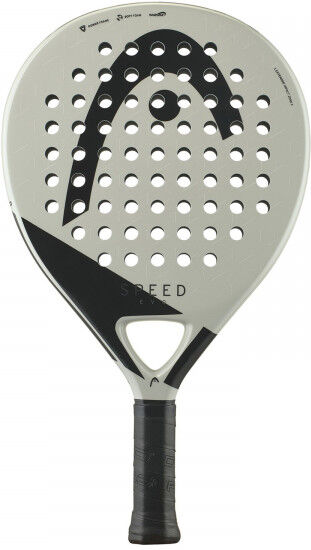
Head Evo Speed Padel RacketThe Head Evo Speed Padel Racket is a nice way to get started with padel. It’s light in hand, with a lower balance that feels easier to handle during rallies.The oversized teardrop shape gives you a large sweet spot, which helps when your timing isn’t perfect. The fibreglass surface and soft foam...64,95 £*Shipping: 4,95 £Secure redirect to the provider
-
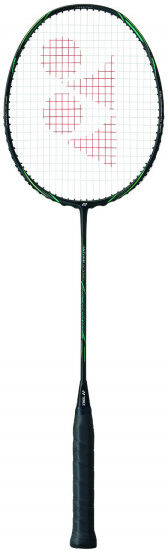
Yonex Astrox Nextage Badminton RacketThe Yonex Astrox Nextage Badminton Racket leans into power, with a head-heavy balance that puts more weight behind your shots. The medium flex feels smooth and steady in your hands.The frame softens the feel on contact, with vibration dampening mesh reducing shock. The weight distribution helps...109,95 £*Shipping: 0,00 £Secure redirect to the provider
-
Termix Fluor Racket Brush GreenHealth and Beauty Brushes Termix Fluor Racket Brush Green The most versatile daily brush for hair care. Goodbye to jerks. Detangles wet and dry. Take care of the scalp and get a simple blow-drying with the dryer.5,93 £*Shipping: 3,99 £Secure redirect to the provider

-
What is the binomial coefficient?
The binomial coefficient, denoted as ${n \choose k}$, represents the number of ways to choose k elements from a set of n elements without regard to the order of selection. It is calculated using the formula ${n \choose k} = \frac{n!}{k!(n-k)!}$, where n! denotes the factorial of n. The binomial coefficient is commonly used in combinatorics and probability theory to calculate the number of combinations or possibilities in a given scenario. **
-
What is the Lusor coefficient?
The Lusor coefficient is a measure of the ability of a fluid to carry sediment. It is used in the field of sediment transport to quantify the sediment-carrying capacity of a fluid, such as water or air. The coefficient takes into account factors such as the size and density of the sediment particles, as well as the velocity and viscosity of the fluid. A higher Lusor coefficient indicates a greater ability of the fluid to transport sediment. **
-
What is the validity coefficient?
The validity coefficient is a statistical measure that quantifies the relationship between a predictor (such as a test or assessment) and a criterion (such as job performance or academic achievement). It indicates the degree to which the predictor is able to accurately predict the criterion. A higher validity coefficient suggests a stronger relationship between the predictor and the criterion, indicating that the predictor is more effective in predicting the criterion. Validity coefficients are commonly used in the field of psychometrics and are important for evaluating the effectiveness of selection tools and assessments. **
-
What is a Gini coefficient?
A Gini coefficient is a measure of income inequality within a population. It is calculated based on the distribution of income or wealth among individuals or households in a given country or region. The coefficient ranges from 0 to 1, with 0 representing perfect equality (everyone has the same income) and 1 representing perfect inequality (one person has all the income). A higher Gini coefficient indicates greater income inequality, while a lower coefficient indicates more equal distribution of income. **


What is the multiplication coefficient?
The multiplication coefficient is a number that represents the factor by which a quantity is multiplied. It is used to scale or increase the value of a quantity by a certain amount. For example, if the multiplication coefficient is 2, then the quantity is doubled. The multiplication coefficient is often used in mathematical equations and calculations to represent the relationship between different quantities. **
How to calculate the Gini coefficient?
The Gini coefficient is calculated by dividing the area between the Lorenz curve (which represents the actual distribution of income or wealth) and the line of perfect equality by the total area under the line of perfect equality. This ratio is then subtracted from 1 to get the Gini coefficient. The Gini coefficient ranges from 0 (perfect equality) to 1 (perfect inequality). The formula for calculating the Gini coefficient is: G = (A / (A + B)), where A is the area between the Lorenz curve and the line of perfect equality, and B is the area under the line of perfect equality. **
Top-Angebote
Products related to Coefficient:
-
Dunlop Megamax Padel RacketThe Dunlop Megamax Padel Racket feels easy to pick up and play with. The round head shape gives you a larger sweet spot, helping you connect more cleanly and keep shots on line.The graphite frame feels light in your hand with a solid response, and the 38 mm profile gives a balanced mix of power...54,95 £*Shipping: 4,95 £Secure redirect to the provider
-
Dunlop Tristorm Lite Padel RacketThe Dunlop Tristorm Lite Padel Racket gives your shots more punch when you step in to attack. The diamond head shape adds extra weight behind the ball, helping you hit with more intent.The graphite frame feels light in your hand, with a steady, solid response on contact. Power frame design adds a...84,95 £*Shipping: 4,95 £Secure redirect to the provider
-
Head Evo Speed Padel RacketThe Head Evo Speed Padel Racket is a nice way to get started with padel. It’s light in hand, with a lower balance that feels easier to handle during rallies.The oversized teardrop shape gives you a large sweet spot, which helps when your timing isn’t perfect. The fibreglass surface and soft foam...64,95 £*Shipping: 4,95 £Secure redirect to the provider
-
Yonex Astrox Nextage Badminton RacketThe Yonex Astrox Nextage Badminton Racket leans into power, with a head-heavy balance that puts more weight behind your shots. The medium flex feels smooth and steady in your hands.The frame softens the feel on contact, with vibration dampening mesh reducing shock. The weight distribution helps...109,95 £*Shipping: 0,00 £Secure redirect to the provider
-
What is the biserial correlation coefficient and the phi coefficient and the chi coefficient?
The biserial correlation coefficient is a measure of the strength and direction of the relationship between a continuous variable and a dichotomous variable. It is calculated when one variable is continuous and the other is dichotomous. The phi coefficient is a measure of association between two dichotomous variables. It is calculated using a 2x2 contingency table and ranges from -1 to 1, with 0 indicating no association and 1 indicating a perfect association. The chi coefficient is a measure of association between two dichotomous variables, similar to the phi coefficient. It is also calculated using a 2x2 contingency table and ranges from -1 to 1, with 0 indicating no association and 1 indicating a perfect association. **
-
Which correlation coefficient?
The correlation coefficient is a statistical measure that quantifies the strength and direction of a relationship between two variables. It ranges from -1 to 1, with -1 indicating a perfect negative correlation, 0 indicating no correlation, and 1 indicating a perfect positive correlation. The correlation coefficient is used to determine how closely the two variables are related and can help in making predictions or understanding the nature of the relationship between them. **
-
What is the binomial coefficient?
The binomial coefficient, denoted as ${n \choose k}$, represents the number of ways to choose k elements from a set of n elements without regard to the order of selection. It is calculated using the formula ${n \choose k} = \frac{n!}{k!(n-k)!}$, where n! denotes the factorial of n. The binomial coefficient is commonly used in combinatorics and probability theory to calculate the number of combinations or possibilities in a given scenario. **
-
What is the Lusor coefficient?
The Lusor coefficient is a measure of the ability of a fluid to carry sediment. It is used in the field of sediment transport to quantify the sediment-carrying capacity of a fluid, such as water or air. The coefficient takes into account factors such as the size and density of the sediment particles, as well as the velocity and viscosity of the fluid. A higher Lusor coefficient indicates a greater ability of the fluid to transport sediment. **
Similar search terms for Coefficient
-
Termix Fluor Racket Brush GreenHealth and Beauty Brushes Termix Fluor Racket Brush Green The most versatile daily brush for hair care. Goodbye to jerks. Detangles wet and dry. Take care of the scalp and get a simple blow-drying with the dryer.5,93 £*Shipping: 3,99 £Secure redirect to the provider
-
Yonex Astrox 88 Play Badminton RacketThe Yonex Astrox 88 Play Badminton Racket is a great place to start as you build your game. The head-heavy balance adds power to your shots, and the medium flex gives a smooth, controlled feel.The isometric frame creates a larger sweet spot, which helps on off-centre hits. The slim shaft gives...83,95 £*Shipping: 4,95 £Secure redirect to the provider
-
Yonex Arcsaber 7 Play Badminton RacketThe Yonex Arcsaber 7 Play Badminton Racket puts control at the centre of your game. The frame holds the shuttle a touch longer on the strings before release, giving you better feel on placement and timing.The isometric frame creates a larger sweet spot, which helps on off-centre hits. The hi-flex...54,95 £*Shipping: 4,95 £Secure redirect to the provider
-
What is the validity coefficient?
The validity coefficient is a statistical measure that quantifies the relationship between a predictor (such as a test or assessment) and a criterion (such as job performance or academic achievement). It indicates the degree to which the predictor is able to accurately predict the criterion. A higher validity coefficient suggests a stronger relationship between the predictor and the criterion, indicating that the predictor is more effective in predicting the criterion. Validity coefficients are commonly used in the field of psychometrics and are important for evaluating the effectiveness of selection tools and assessments. **
-
What is a Gini coefficient?
A Gini coefficient is a measure of income inequality within a population. It is calculated based on the distribution of income or wealth among individuals or households in a given country or region. The coefficient ranges from 0 to 1, with 0 representing perfect equality (everyone has the same income) and 1 representing perfect inequality (one person has all the income). A higher Gini coefficient indicates greater income inequality, while a lower coefficient indicates more equal distribution of income. **
-
What is the multiplication coefficient?
The multiplication coefficient is a number that represents the factor by which a quantity is multiplied. It is used to scale or increase the value of a quantity by a certain amount. For example, if the multiplication coefficient is 2, then the quantity is doubled. The multiplication coefficient is often used in mathematical equations and calculations to represent the relationship between different quantities. **
-
How to calculate the Gini coefficient?
The Gini coefficient is calculated by dividing the area between the Lorenz curve (which represents the actual distribution of income or wealth) and the line of perfect equality by the total area under the line of perfect equality. This ratio is then subtracted from 1 to get the Gini coefficient. The Gini coefficient ranges from 0 (perfect equality) to 1 (perfect inequality). The formula for calculating the Gini coefficient is: G = (A / (A + B)), where A is the area between the Lorenz curve and the line of perfect equality, and B is the area under the line of perfect equality. **
* All prices are inclusive of VAT and, if applicable, plus shipping costs. The offer information is based on the details provided by the respective shop and is updated through automated processes. Real-time updates do not occur, so deviations can occur in individual cases. ** Note: Parts of this content were created by AI.