Buy tischtennis.online ?
We are moving the project
tischtennis.online .
Are you interested in purchasing the domain
tischtennis.online ?
domain@kv-gmbh.de · 0541-91531010
Buy tischtennis.online ?
What are the differences between covalent bonds, metallic bonds, and ionic bonds?
Covalent bonds are formed when two atoms share electrons, resulting in a strong bond between the atoms. Metallic bonds occur between metal atoms, where the electrons are delocalized and free to move throughout the structure, creating a strong bond. Ionic bonds are formed between a metal and a nonmetal, where one atom transfers electrons to the other, resulting in the formation of positively and negatively charged ions that are attracted to each other. Overall, covalent bonds involve electron sharing, metallic bonds involve electron delocalization, and ionic bonds involve electron transfer. **
Do CO bonds form with other CO bonds?
No, CO bonds do not typically form with other CO bonds. Carbon monoxide (CO) is a stable molecule with a triple bond between the carbon and oxygen atoms. This triple bond is strong and does not readily form additional bonds with other CO molecules. Instead, CO molecules tend to interact with other types of molecules through various types of chemical reactions. **


Similar search terms for Bonds
Top-Angebote
Products related to Bonds:
-
CAPCOM EUROSOFT LTD Monster Hunter Stories 3 Twist - Nintendo Switch 2 Game Cartridge - Unbreakable BondsEmbark on a new Riders' journey in Monster Hunter Stories 3 Twist for Nintendo Switch. Forge unbreakable bonds with Monsties, hatch mysterious eggs, and uncover a sweeping story filled with discovery and danger. This standalone adventure blends accessible, turn-based combat with deep team-building and exploration, making it suitable for both returning Riders and newcomers to the Monster Hunter universe. Recruit and raise a party of fan-favorite monsters, combine their abilities through layered skill trees, and unleash powerful Kinship Skills in strategic battles. Explore vibrant biomes, gather crafting materials, and customize weapons and armor to match your playstyle. With richly animated cutscenes, character-driven quests, and an expansive bestiary to collect, Monster Hunter Stories 3 Twist delivers a compelling RPG experience at home or on the go.66,53 £*Shipping: 0,00 £Secure redirect to the provider
-
Dunlop Megamax Padel RacketThe Dunlop Megamax Padel Racket feels easy to pick up and play with. The round head shape gives you a larger sweet spot, helping you connect more cleanly and keep shots on line.The graphite frame feels light in your hand with a solid response, and the 38 mm profile gives a balanced mix of power...54,95 £*Shipping: 4,95 £Secure redirect to the provider
-
Head Evo Speed Padel RacketThe Head Evo Speed Padel Racket is a nice way to get started with padel. It’s light in hand, with a lower balance that feels easier to handle during rallies.The oversized teardrop shape gives you a large sweet spot, which helps when your timing isn’t perfect. The fibreglass surface and soft foam...64,95 £*Shipping: 4,95 £Secure redirect to the provider
-
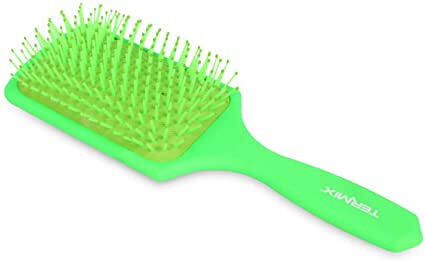
Termix Fluor Racket Brush GreenHealth and Beauty Brushes Termix Fluor Racket Brush Green The most versatile daily brush for hair care. Goodbye to jerks. Detangles wet and dry. Take care of the scalp and get a simple blow-drying with the dryer.5,96 £*Shipping: 3,99 £Secure redirect to the provider



-
Why are intermolecular bonds generally weaker than covalent bonds?
Intermolecular bonds are generally weaker than covalent bonds because they involve interactions between molecules rather than within a single molecule. Covalent bonds involve the sharing of electrons between atoms, creating strong bonds within a molecule. In contrast, intermolecular bonds, such as hydrogen bonds or van der Waals forces, are weaker because they are based on temporary interactions between molecules, which can be easily broken. Additionally, intermolecular bonds are influenced by factors such as distance and orientation, further contributing to their weaker nature compared to covalent bonds. **
-
Why are intermolecular bonds weaker than electron pair bonds?
Intermolecular bonds are weaker than electron pair bonds because they involve interactions between molecules rather than within a single molecule. In intermolecular bonds, the attractive forces between molecules are generally weaker than the covalent bonds that hold atoms together within a molecule. Additionally, intermolecular bonds are typically temporary and can be easily broken, whereas electron pair bonds are strong and stable. Overall, the weaker nature of intermolecular bonds allows molecules to move and interact with each other more freely. **
-
Why are intermolecular bonds typically weaker than covalent bonds?
Intermolecular bonds are typically weaker than covalent bonds because they involve interactions between molecules rather than within a single molecule. In intermolecular bonds, the attractive forces between molecules, such as van der Waals forces or hydrogen bonding, are weaker than the strong sharing of electrons in covalent bonds. Additionally, intermolecular bonds are more easily broken or disrupted by changes in temperature or pressure, leading to lower bond energies compared to covalent bonds. **
-
Why are intermolecular bonds typically weaker than electron pair bonds?
Intermolecular bonds are typically weaker than electron pair bonds because they involve interactions between molecules rather than within a single molecule. In intermolecular bonds, the attractive forces between molecules are generally weaker than the covalent bonds that hold atoms together within a molecule. Additionally, intermolecular bonds are usually based on weaker forces such as van der Waals forces, hydrogen bonding, or dipole-dipole interactions, which are not as strong as the sharing or transfer of electrons in covalent or ionic bonds. **


Why are intermolecular bonds generally weaker than electron pair bonds?
Intermolecular bonds are generally weaker than electron pair bonds because they involve interactions between molecules, which are larger and less localized than the interactions between atoms in a covalent bond. In intermolecular bonds, the attractive forces are typically weaker due to the larger distance between molecules and the lack of direct sharing of electrons. In contrast, electron pair bonds involve the sharing of electrons between atoms, leading to stronger and more localized bonding interactions. **
Why are polar bonds lower in energy than nonpolar bonds?
Polar bonds are lower in energy than nonpolar bonds because they involve the unequal sharing of electrons between two atoms with different electronegativities. This unequal sharing creates a dipole moment, which results in an attractive force between the partially positive and partially negative ends of the molecule. This electrostatic attraction lowers the overall energy of the molecule compared to nonpolar bonds, where electrons are shared equally. As a result, polar bonds are typically stronger and more stable than nonpolar bonds. **
Top-Angebote
Products related to Bonds:
-
milk_shake Everlasting Bonds Leave In Treatment 100mLA hair-care product. It a lightweight leave-in treatment designed to enhance your hair's softness, shine, and manageability without adding weight. This innovative formula provides heat protection up to 230°C, making it ideal for styling while addressing hair damage and promoting a healthier appearance.31,24 £*Shipping: 5,22 £Secure redirect to the provider
-
Matrix Instacure Build-A-Bond Mighty Bonds Shampoo 300ml DoubleStock up and save on professional results at home with this double Matrix Instacure Build-A-Bond Mighty Bonds Shampoo! (Includes 2 x 300ml Shampoo) Healthy hair starts from within, and this Matrix Instacure Build-A-Bond Mighty Bonds Shampoo gets straight to work This luxuriously textured shampoo forms a rich lather and gets to work immediately on mega damaged hair. Key ingredients include Citric acid, which penetrates deep into the hair fiber to strengthen and repair your hair from within. It's also infused with Squalane, which works on the hair's surface to soften and smooth every strand! Ingredients: AQUA / WATER / EAU, DECYL GLUCOSIDE, SODIUM COCOYL ISETHIONATE, COCAMIDOPROPYL BETAINE, CITRIC ACID, SODIUM HYDROXIDE, PANTHENOL, PARFUM / FRAGRANCE, GLYCERIN, DIMETHICONE, PEG-150 DISTEARATE, PPG-5-CETETH-20, SODIUM BENZOATE, SODIUM CHLORIDE, PEG-55 PROPYLENE GLYCOL OLEATE, PROPYLENE GLYCOL, CARBOMER, LIMONENE, COCO-CAPRYLATE/CAPRATE, POLYQUATERNIUM-67, SALICYLIC ACID, AMODIMETHICONE, SODIUM PHYTATE, GLYCOL DISTEARATE, SQUALANE, COCO-BETAINE, LINALOOL, ACRYLATES/BEHENETH-25 METHACRYLATE COPOLYMER, CITRONELLOL, TRIDECETH-6, BENZYL ALCOHOL, ALCOHOL, CETRIMONIUM CHLORIDE, CI 17200 / RED 3324,16 £*Shipping: 0,00 £Secure redirect to the provider
-
CAPCOM EUROSOFT LTD Monster Hunter Stories 3 Twist - Nintendo Switch 2 Game Cartridge - Unbreakable BondsEmbark on a new Riders' journey in Monster Hunter Stories 3 Twist for Nintendo Switch. Forge unbreakable bonds with Monsties, hatch mysterious eggs, and uncover a sweeping story filled with discovery and danger. This standalone adventure blends accessible, turn-based combat with deep team-building and exploration, making it suitable for both returning Riders and newcomers to the Monster Hunter universe. Recruit and raise a party of fan-favorite monsters, combine their abilities through layered skill trees, and unleash powerful Kinship Skills in strategic battles. Explore vibrant biomes, gather crafting materials, and customize weapons and armor to match your playstyle. With richly animated cutscenes, character-driven quests, and an expansive bestiary to collect, Monster Hunter Stories 3 Twist delivers a compelling RPG experience at home or on the go.66,53 £*Shipping: 0,00 £Secure redirect to the provider
-
Dunlop Megamax Padel RacketThe Dunlop Megamax Padel Racket feels easy to pick up and play with. The round head shape gives you a larger sweet spot, helping you connect more cleanly and keep shots on line.The graphite frame feels light in your hand with a solid response, and the 38 mm profile gives a balanced mix of power...54,95 £*Shipping: 4,95 £Secure redirect to the provider
-
What are the differences between covalent bonds, metallic bonds, and ionic bonds?
Covalent bonds are formed when two atoms share electrons, resulting in a strong bond between the atoms. Metallic bonds occur between metal atoms, where the electrons are delocalized and free to move throughout the structure, creating a strong bond. Ionic bonds are formed between a metal and a nonmetal, where one atom transfers electrons to the other, resulting in the formation of positively and negatively charged ions that are attracted to each other. Overall, covalent bonds involve electron sharing, metallic bonds involve electron delocalization, and ionic bonds involve electron transfer. **
-
Do CO bonds form with other CO bonds?
No, CO bonds do not typically form with other CO bonds. Carbon monoxide (CO) is a stable molecule with a triple bond between the carbon and oxygen atoms. This triple bond is strong and does not readily form additional bonds with other CO molecules. Instead, CO molecules tend to interact with other types of molecules through various types of chemical reactions. **
-
Why are intermolecular bonds generally weaker than covalent bonds?
Intermolecular bonds are generally weaker than covalent bonds because they involve interactions between molecules rather than within a single molecule. Covalent bonds involve the sharing of electrons between atoms, creating strong bonds within a molecule. In contrast, intermolecular bonds, such as hydrogen bonds or van der Waals forces, are weaker because they are based on temporary interactions between molecules, which can be easily broken. Additionally, intermolecular bonds are influenced by factors such as distance and orientation, further contributing to their weaker nature compared to covalent bonds. **
-
Why are intermolecular bonds weaker than electron pair bonds?
Intermolecular bonds are weaker than electron pair bonds because they involve interactions between molecules rather than within a single molecule. In intermolecular bonds, the attractive forces between molecules are generally weaker than the covalent bonds that hold atoms together within a molecule. Additionally, intermolecular bonds are typically temporary and can be easily broken, whereas electron pair bonds are strong and stable. Overall, the weaker nature of intermolecular bonds allows molecules to move and interact with each other more freely. **
Similar search terms for Bonds
-
Head Evo Speed Padel RacketThe Head Evo Speed Padel Racket is a nice way to get started with padel. It’s light in hand, with a lower balance that feels easier to handle during rallies.The oversized teardrop shape gives you a large sweet spot, which helps when your timing isn’t perfect. The fibreglass surface and soft foam...64,95 £*Shipping: 4,95 £Secure redirect to the provider
-
Termix Fluor Racket Brush GreenHealth and Beauty Brushes Termix Fluor Racket Brush Green The most versatile daily brush for hair care. Goodbye to jerks. Detangles wet and dry. Take care of the scalp and get a simple blow-drying with the dryer.5,96 £*Shipping: 3,99 £Secure redirect to the provider
-
Yonex Astrox Nextage Badminton RacketThe Yonex Astrox Nextage Badminton Racket leans into power, with a head-heavy balance that puts more weight behind your shots. The medium flex feels smooth and steady in your hands.The frame softens the feel on contact, with vibration dampening mesh reducing shock. The weight distribution helps...109,95 £*Shipping: 0,00 £Secure redirect to the provider
-
Dunlop Tristorm Lite Padel RacketThe Dunlop Tristorm Lite Padel Racket gives your shots more punch when you step in to attack. The diamond head shape adds extra weight behind the ball, helping you hit with more intent.The graphite frame feels light in your hand, with a steady, solid response on contact. Power frame design adds a...84,95 £*Shipping: 4,95 £Secure redirect to the provider
-
Why are intermolecular bonds typically weaker than covalent bonds?
Intermolecular bonds are typically weaker than covalent bonds because they involve interactions between molecules rather than within a single molecule. In intermolecular bonds, the attractive forces between molecules, such as van der Waals forces or hydrogen bonding, are weaker than the strong sharing of electrons in covalent bonds. Additionally, intermolecular bonds are more easily broken or disrupted by changes in temperature or pressure, leading to lower bond energies compared to covalent bonds. **
-
Why are intermolecular bonds typically weaker than electron pair bonds?
Intermolecular bonds are typically weaker than electron pair bonds because they involve interactions between molecules rather than within a single molecule. In intermolecular bonds, the attractive forces between molecules are generally weaker than the covalent bonds that hold atoms together within a molecule. Additionally, intermolecular bonds are usually based on weaker forces such as van der Waals forces, hydrogen bonding, or dipole-dipole interactions, which are not as strong as the sharing or transfer of electrons in covalent or ionic bonds. **
-
Why are intermolecular bonds generally weaker than electron pair bonds?
Intermolecular bonds are generally weaker than electron pair bonds because they involve interactions between molecules, which are larger and less localized than the interactions between atoms in a covalent bond. In intermolecular bonds, the attractive forces are typically weaker due to the larger distance between molecules and the lack of direct sharing of electrons. In contrast, electron pair bonds involve the sharing of electrons between atoms, leading to stronger and more localized bonding interactions. **
-
Why are polar bonds lower in energy than nonpolar bonds?
Polar bonds are lower in energy than nonpolar bonds because they involve the unequal sharing of electrons between two atoms with different electronegativities. This unequal sharing creates a dipole moment, which results in an attractive force between the partially positive and partially negative ends of the molecule. This electrostatic attraction lowers the overall energy of the molecule compared to nonpolar bonds, where electrons are shared equally. As a result, polar bonds are typically stronger and more stable than nonpolar bonds. **
* All prices are inclusive of VAT and, if applicable, plus shipping costs. The offer information is based on the details provided by the respective shop and is updated through automated processes. Real-time updates do not occur, so deviations can occur in individual cases. ** Note: Parts of this content were created by AI.